
Campground advertising works when it puts the right site in front of an RV traveler at the moment they are choosing where to stay, then makes booking easy. In practice that means search ads for people close to booking, retargeting for people who already visited your site, social ads for inspiration, and a listing or sponsorship where RV travelers already browse. Then you measure completed reservations, not clicks.
This guide walks through each piece for RV parks and campgrounds, and for service providers and brands that want to reach the same travelers.
TL;DR
- Start with search. OHI’s 2023 Generational Camping Report found that 82% of campers use online search to find a campground, so your listing and local search presence come before any paid social.
- Target by interest and need, not just by map. Build ads around a specific problem, such as empty midweek nights, and a specific rig type.
- Describe sites the way an RV driver reads them: pull-through or back-in, length, hookups, surface, level or sloped.
- Judge ads by attributed revenue and completed bookings, and track phone calls as well as online reservations.
- Brands and service providers can reach RV travelers through sponsorships and listings on RV-focused platforms, including ours.
Table of Contents
- Why search comes first
- The channels that reach RV travelers
- Target the problem, not just the zip code
- What your ad and landing page should say
- Measure bookings, not clicks
- What advertising costs
- For service providers and brands: reaching RV travelers
- Our perspective: advertising should lower an owner’s cost, not add a toll
- Reach RV travelers through RentMyRV.com
- A 30-day starting plan
- FAQ
- Sources
Why search comes first
An RV traveler planning a trip usually has a route, a rig length and a few must-haves before they pick a park. They type those into a search engine or an app. The OHI figure above is the clearest US data point: most campers start online, and they look for informative, visual content and results that fit their location.
That has two consequences for your advertising.
First, the page the ad lands on matters as much as the ad. If a traveler clicks and finds a clunky mobile site, no obvious availability and no site details, you have paid for a visit that goes nowhere. Fix the booking path on a phone before you raise any budget.
Second, free local visibility and paid visibility support each other. A complete Google Business Profile, consistent name, address and phone number, current photos and recent reviews make every paid click more likely to convert, because the traveler sees the same park in both places.
The channels that reach RV travelers
No single channel does everything. Think of them as stages of one trip decision.
Search ads: people close to booking
Search ads catch travelers who have already said what they want: “RV park near Moab with full hookups” or “pull-through sites Orlando.” Because intent is high, this is the channel most campgrounds should fund first. Keep campaigns separate by theme rather than running one broad campaign. Full hookups, pet-friendly, waterfront and big-rig friendly each deserve their own ad group, so the ad copy matches what the person typed.
Use negative keywords to cut out clicks that will never book, such as searches for free camping, tent rentals or jobs. Broad keywords in a single campaign are the classic way to burn a small budget on irrelevant clicks.
Retargeting: people who already looked
Most visitors leave your site without booking. Retargeting shows them a reminder ad, ideally for the dates or site type they viewed. It tends to cost less per booking than cold traffic because the audience already knows you. It only works once you have enough site traffic to build an audience, which is another reason to start with search and local visibility.
Facebook and Instagram: inspiration
Social ads are better at planting the idea than closing the booking. Use them for seasonal pushes, new amenities, events and photography of the actual sites. Interest targeting, such as RV travel, camping and family travel, lets you reach people who fit your ideal guest even when they are not searching yet.
Online travel marketplaces and RV-focused platforms
OHI notes that online travel agencies and similar marketplaces can help campgrounds reach a wider audience of travelers. Large outdoor marketplaces run their own paid campaigns across social, search, video and email on behalf of listed hosts, as Hipcamp describes in its help center. The trade-off is that you rent someone else’s audience, usually for a fee or commission, so treat marketplaces as a discovery layer and send repeat guests to your own booking page.
Directory, newsletter and sponsorship placements
RV-specific directories, state and regional campground associations and email newsletters reach people who have already chosen the RV lifestyle. Regional associations sometimes offer shared campaigns and advertiser slots for their members. These placements cost more per impression than a social ad, but the audience is narrower and more relevant. Ask any publisher for audience size, where readers live, and what past advertisers saw, before you commit.
Target the problem, not just the zip code
The most useful advertising question is not “how do I get more guests?” but “which nights am I trying to fill, and who would book them?”
A problem-based approach looks like this:
- Midweek vacancies: target retirees and remote workers with a weekly or monthly rate and a strong Wi-Fi claim, if you can back it up.
- Shoulder season: target snowbirds and fall road-trippers with a stay-longer offer.
- Big rigs: build an ad group for Class A motorhomes and fifth wheels that names maximum rig length, pull-through access and 50-amp service.
- First-time renters: many people who rent an RV have never driven one. Easy back-in help, level pads and a staffed office matter to them. Our first-time RV rental checklist shows what these travelers worry about.
A tighter audience can make the budget go further, because you stop paying to show a pull-through ad to someone with a pop-up camper.
What your ad and landing page should say
RV travelers choose on practical detail. A pretty sunset photo gets the click, but length limits, hookups and access get the booking.
Describe the site, not just the park
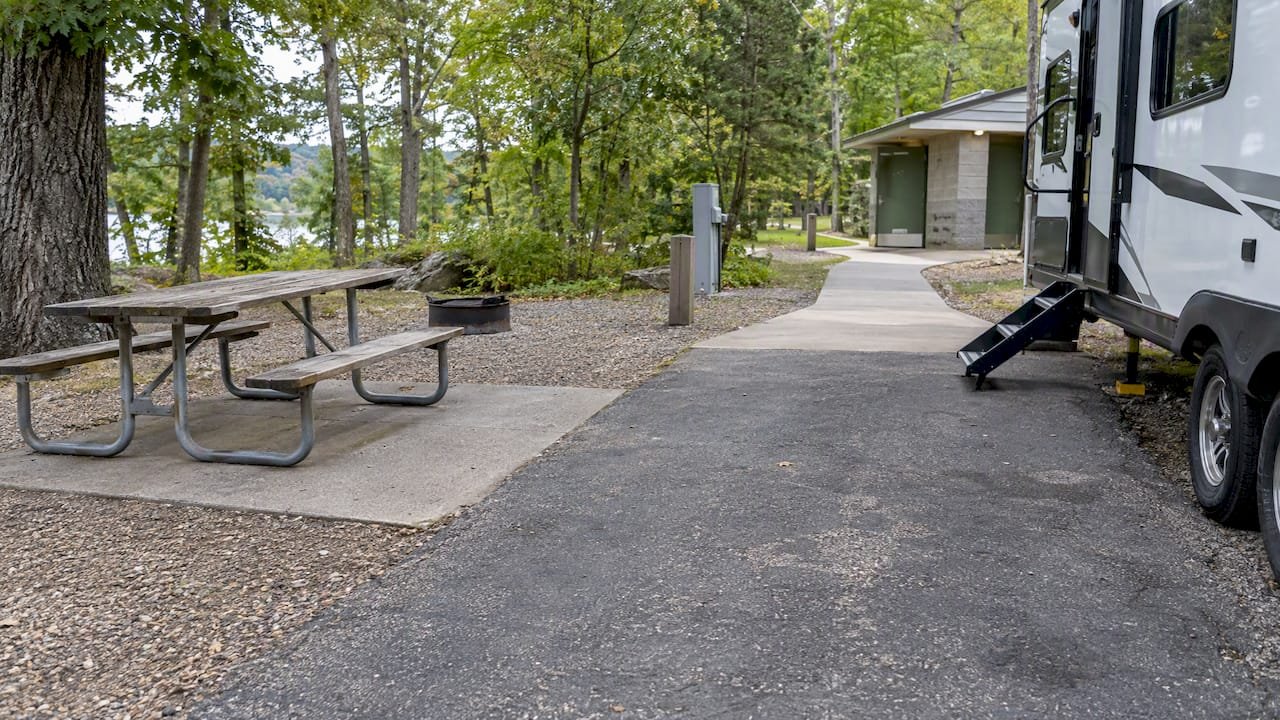
Write separate descriptions for back-in sites, pull-through sites and tent-only sites. For each RV site, give length, surface, shade, level or sloped ground, slide-out suitability, maximum rig size and how close it sits to restrooms, trails and water. Hipcamp’s guidance on site descriptions adds capacity, terrain, access type (drive-in, walk-in or hike-in) and accommodation type, such as cabins, yurts or glamping tents.
List amenities as plain facts a traveler can filter on: hookup type and amperage, Wi-Fi, pets, laundry, showers, dump station, fire pits, trails or river access.
Show variety without confusing people
If you offer RV sites, cabins and tents, give each its own section or page, with its own photos and price range. A traveler who wants a 40-foot pull-through should not have to scroll through tent pads to find it.
Include accessibility information
Accessibility is both a service to guests and a trust signal. The Federal Camping Data Standard 2.0 says a campground listing should give a high-level description, a map showing roads, key amenities and sites, and photographs of facilities that include key amenities. It also supports alt text on photos.
National parks show what specific looks like. Voyageurs National Park spells out the features of an accessible campsite, from tent pad and picnic table to toilet and dock lift. Great Basin National Park separately describes wheelchair access, paved parking, gravel or dirt surfaces, steep ground, and RV allowance with maximum vehicle length. You do not need a federal budget to copy the approach: state what is paved, what is steep and what is accessible, and show it.
Make the next step easy
Use current photos, put availability and booking one tap away on mobile, and mention add-ons such as firewood, propane or golf cart rentals during booking. Add-ons raise the value of each stay without raising your ad spend.
Measure bookings, not clicks
Clicks tell you an ad was interesting. Bookings tell you it was worth the money. OHI’s guidance on measuring ROAS defines return on ad spend as advertising-attributed revenue divided by advertising cost, and says to connect campaigns to completed bookings through conversion tracking, attribution and reservation-system data.
A workable setup for a small park:
- Tag every ad link with UTM parameters, so each campaign shows up by name in Google Analytics.
- Set up GA4 events for the Book Now click and for completed reservations.
- Track phone calls. Many RV travelers call to ask about rig length. If you count only online reservations, you will undercount what your ads produce.
- Compare sources with real reservations in your booking system once a month. If analytics says 40 bookings and your system says 25, trust the system and fix the tracking.
- Decide the goal first. Name the dates or site types you want to fill, the audience for them and the number that counts as success before you spend.
Worked example: you spend $600 in a month on search and retargeting for midweek stays and your reservation system shows $2,400 in revenue tied to those campaigns. Your ROAS is 4.0. If the same month’s social ads cost $300 and tie to $450, that is 1.5. Keep funding the first and rework or shrink the second.
What advertising costs
Costs vary by region, season and competition, so be skeptical of any single figure. Search clicks in a small rural market usually cost much less than in a destination like Orlando or Moab. Rather than copying a published average, run a small test budget for 30 days on one ad group, record the cost per completed booking, and scale what works. Industry guides often suggest giving most of the budget to search, a meaningful share to retargeting and the rest to social awareness. Treat that as a starting split and adjust it with your own booking data.
For sponsorships and directory placements, ask for the rate card, the audience description and the term length in writing, and compare the cost per thousand readers with what a search click costs you.
For service providers and brands: reaching RV travelers
Campgrounds are not the only advertisers in this market. Repair shops, mobile technicians, towing companies, insurers, parts sellers and outdoor brands all want to be seen by RV travelers before something breaks or a trip is booked.
The same rules apply. Reach people by interest and situation. A mobile repair shop gets more from a listing that shows up when an owner needs help than from a general banner. A brand gets more from a sponsorship that sits beside trip planning than from a one-off impression. Partnerships between brands in different industries can also work well: one academic study of the European RV rental company Indie Campers found that collaboration between brands from different industries was the most impactful strategy for consumer engagement.
If you are choosing a mobile repair provider yourself, our guide on how to choose a mobile RV service provider shows what an RV owner looks for, which is useful to know when you write your own ad.
Our perspective: advertising should lower an owner’s cost, not add a toll
We run an RV rental marketplace, so we see this topic from both sides: owners trying to fill their calendar and travelers trying to find a rig or a place to park it. Here is what we think follows from that.
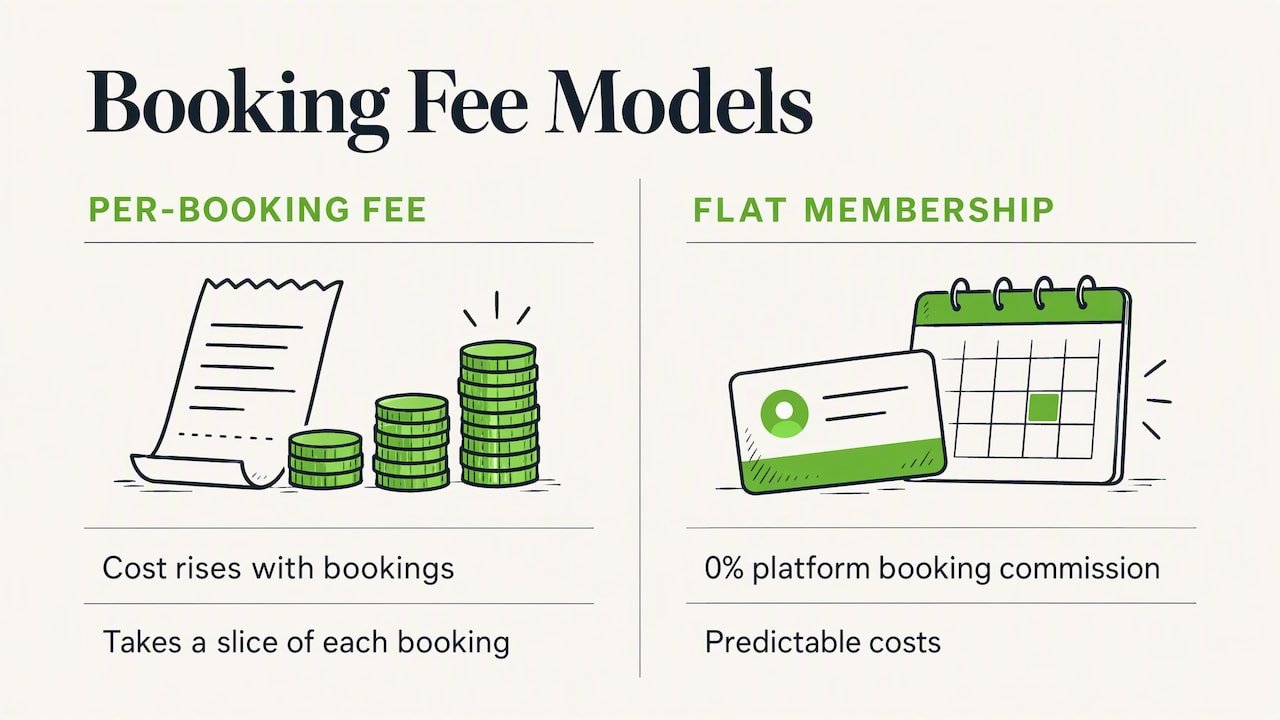
Advertising is only worth it when the math is simple. Many rental platforms take a slice of every booking, which means the more successful an owner is, the more they pay. We built RentMyRV.com on a flat membership instead, with 0% platform booking commission, so owners keep their rental income and can predict their costs. The same logic should guide any ad you buy: know what a booking is worth, know what you pay to get it, and be able to see both numbers.
We also think a marketplace works better when it includes the people RV travelers need around the trip: repair, towing, insurance, parts and campgrounds. A traveler who finds a trustworthy provider in the same place as their rental is more likely to come back, and a provider that shows up at the moment of need is advertising at its most effective. If you want to see how we think about fees, read our comparison of commission versus flat membership.
— User
Reach RV travelers through RentMyRV.com
If you own an RV and want to rent it out, our Standard membership is $299 per month per RV profile, with 0% platform booking commission. Founding packages are available as a one-off payment from $597 to $2,388. Details are on the RV owner membership page.
If you run a campground, repair shop, towing service or brand, we offer provider listings and sponsorships so your business can appear where RV travelers plan their trips. Pricing for these is not published, so ask us for the current options. To see how owners, renters and providers fit together, start with how RentMyRV.com works.
A 30-day starting plan
If you are starting from zero, this order keeps spending low and learning high.
- Week 1: Fix the basics. Update photos, write separate descriptions for each site type, check the mobile booking flow, claim your Google Business Profile and add UTM links and GA4 events.
- Week 2: Launch one search campaign with two or three tightly themed ad groups and a list of negative keywords. Track calls.
- Week 3: Add retargeting once you have visitors, and one social campaign tied to a specific gap in your calendar.
- Week 4: Review completed bookings and revenue by campaign. Pause what did not produce, then move that budget to what did.
After that, add a directory or sponsorship placement only if you can name the audience and the nights it is meant to fill.
FAQ
How do I advertise a campground?
Start with a strong website and a complete local search profile, then run search ads for high-intent travelers. Add retargeting for site visitors and social ads for seasonal awareness. Track completed reservations and phone calls so you know which spend produced revenue.
Where should a small campground put its first advertising dollars?
Put them in search ads aimed at specific site types, such as pull-through sites with full hookups, because those searchers are close to booking. Keep the campaign narrow and review results monthly. Expand to retargeting and social only after the booking path works well on a phone.
How do I know if my campground ads are working?
Look at completed bookings and the revenue tied to each campaign, not just clicks. Use UTM links and GA4 to attribute reservations, count calls separately, and compare the totals against your reservation system. ROAS, which is attributed revenue divided by ad cost, gives you one number to compare channels.
Can an RV service provider or brand advertise to the same travelers?
Yes. Repair, towing, insurance, parts and gear businesses can use sponsorships, listings and email placements on RV-focused platforms. Choose placements tied to trip planning or a moment of need, and ask for audience details before you pay.
Sources
- Reaching New Campers in Today’s Competitive Marketplace, OHI
- Track Your ROAS: How Campgrounds Can Measure What’s Working, OHI
- How is Hipcamp marketing my listing?, Hipcamp Help
- What should I write in my site descriptions?, Hipcamp Help
- Federal Camping Data Standard 2.0
- Types of Campsites and Amenities, Voyageurs National Park
- Campgrounds, Great Basin National Park
- Driving from awareness to purchase intent: Indie Campers, Universidade Católica Portuguesa