
Orlando RV Trip Planning Guide: Match Your RV, Campsite, and Itinerary
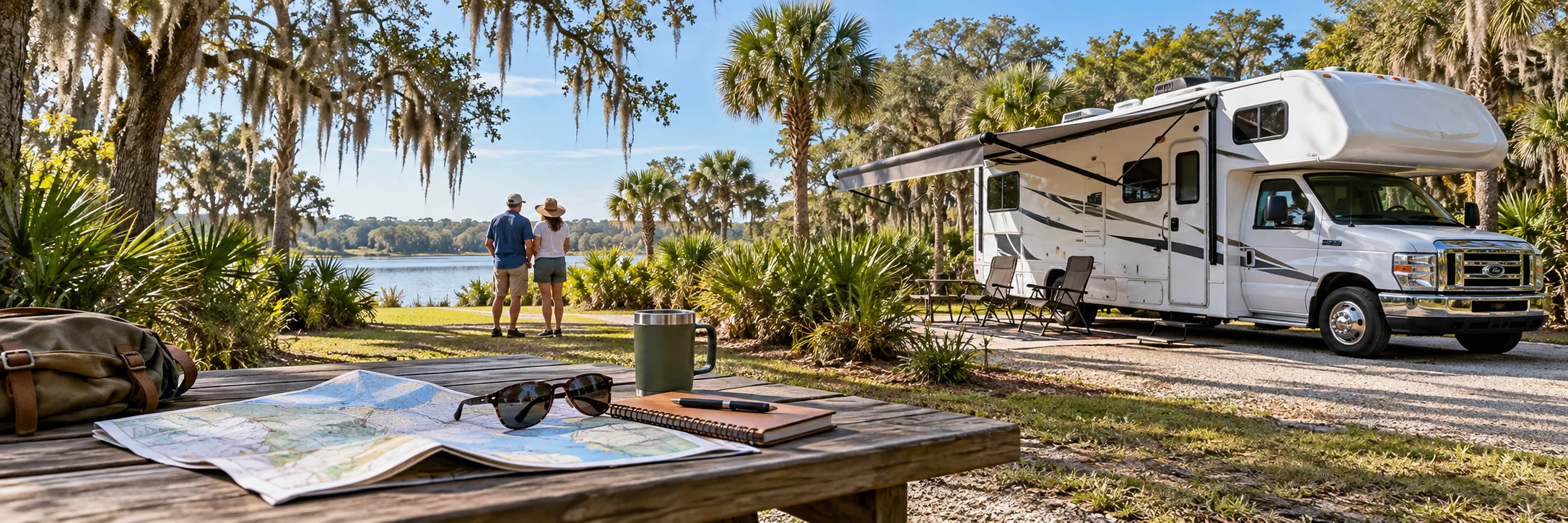
An Orlando RV trip can combine time outdoors with the activities that brought you to Central Florida. The planning challenge is to make the RV, campsite, and daily itinerary work together. Start with a base that fits your plans, then build the rest of the trip around confirmed arrangements.
Choose your trip style
First decide whether you want a campground stay with a few outings, a trip centered on attractions, or a road trip that starts in the Orlando area. Each approach changes what matters most. A stationary stay may make owner delivery worth exploring. A multi-stop route places more emphasis on driving or towing, departure timing, campsite access, and how long you want to move between stops.
Give each traveler a say in the plan. Write down the activities you consider essential and the time you want to leave unstructured. A crowded itinerary can make setup and travel feel like extra chores. For a first RV experience, keeping the first stay straightforward gives you time to learn the vehicle and settle in.
Research actual camping options
Two Central Florida parks to investigate through official information are Wekiwa Springs State Park in the Apopka area and Lake Louisa State Park in the Clermont area. Florida State Parks lists camping information for both. They are research starting points, not a claim that a particular RV site is available for your dates.
| Park | Research link | Confirm for your stay |
|---|---|---|
| Wekiwa Springs State Park | Official park page | Current alerts, entry and camping requirements, site details, and access |
| Lake Louisa State Park | Official park page | Reservation availability, selected campsite, arrival instructions, and equipment fit |
Use each park’s current page and reservation information rather than an old screenshot of fees or opening hours. Florida State Parks notes that maximum RV lengths vary by park. Check the official RV camping guidance, then confirm the details of the specific site you are considering. Verify the RV’s dimensions with its owner before making the campsite decision.
Match the RV to the site
Ask about vehicle length, height, utility requirements, and room needed for setup. Check the site description for what is permitted and what is provided. A listing described as “RV camping” does not by itself tell you whether your particular unit fits or whether the hookups meet your needs.
If you want a delivered RV, confirm that the owner serves the location and that the campground allows the arrangement. Clarify who makes the campground reservation, who checks in, when delivery can take place, and who handles setup and collection. Keep the owner’s dates and the campground dates consistent, including the final collection or return day.
Plan transport after the RV is set up
Think through how you will get from the campground to each day’s activity. A motorhome used as your base may not be the vehicle you want to move every morning. A delivered trailer may leave you needing another transport option. Confirm parking and vehicle restrictions with the destination, and consider how the day’s start and finish will fit with campground access and your group’s needs.
Use current maps and destination information to estimate travel time instead of assuming that every place marketed as “Orlando area” is close to your campground. Build in time for parking, check-in, supplies, and the return journey. Your plan should work on a day when an activity takes longer than expected.
Make one complete trip budget
Separate the rental price from campground costs, delivery, fuel, local transport, activity tickets, groceries, and any other charges. Ask the owner for the full rental breakdown, including mileage or generator allowances, insurance arrangements, deposits, and return expectations. A refundable deposit is different from a nonrefundable charge, but it still matters to the cash needed for the trip.
Orlando trip-planning worksheet
- Dates and travelers: arrival, departure, group size, sleeping needs.
- RV: type, dimensions, pickup or delivery, included equipment.
- Campsite: confirmed site, permitted equipment, hookups, arrival rules.
- Daily transport: how you will reach activities and return to the campground.
- Budget: rental, site, delivery, transport, activities, meals, and other charges.
- Backup: an alternative activity and a contact plan if arrangements change.
A flexible three-night planning example
This example shows how to organize time, not a pre-booked itinerary. On arrival day, allow room for pickup or delivery, check-in, the RV walkthrough, and basic supplies. Make the first evening simple. On the next day, choose your main outing and leave enough time for travel and an unhurried return. Use the following day for a second activity or time at the campground, depending on conditions and your group.
On departure day, follow the owner’s return instructions and the campground’s checkout requirements. If the RV will be collected, confirm the sequence so you do not promise access after the campsite reservation ends. A schedule that leaves room for those practical steps can be more enjoyable than squeezing in one last stop.
Check current information before departure
Revisit the official park and attraction pages shortly before travel. Check alerts, weather, reservations, and any change to the arrangements you made. The National Park Service trip-planning guide offers a useful general framework for researching a visit and creating an alternative plan. Apply it alongside the instructions for the particular places on your itinerary.
Save confirmation details and contact information where you can access them during the trip. For the vehicle side of your planning, use the first-time RV rental checklist to prepare your questions before committing.
Where RentMyRV.com fits
RentMyRV.com is based in Orlando, Florida, and is building an online peer-to-peer RV rental and service-provider ecosystem. The current website collects interest while the marketplace develops; it does not yet offer live booking or promise a particular RV’s availability. Learn about the planned experience on the RentMyRV.com renters page and join renter updates for confirmed availability news.
Orlando RV planning questions
Does an Orlando-area listing include delivery?
Only if the owner offers and agrees to it. Confirm the exact location, charges, setup, and collection.
Can I assume an RV will fit any campground?
No. Match the vehicle and setup requirements to the specific site before making the reservation.
Should I reserve the RV or campsite first?
Check that both have suitable availability, then coordinate the commitments and their cancellation terms. Avoid locking in one while assuming the other will work.
Join the RentMyRV.com community.
Our marketplace is being developed. Choose Owner, Renter, or Service Provider on the signup form for relevant updates. Sponsors can email info@rentmyrv.com.
Get RentMyRV updates